
Gold isn’t just a commodity right now – it’s the market’s barometer for geopolitical risk.
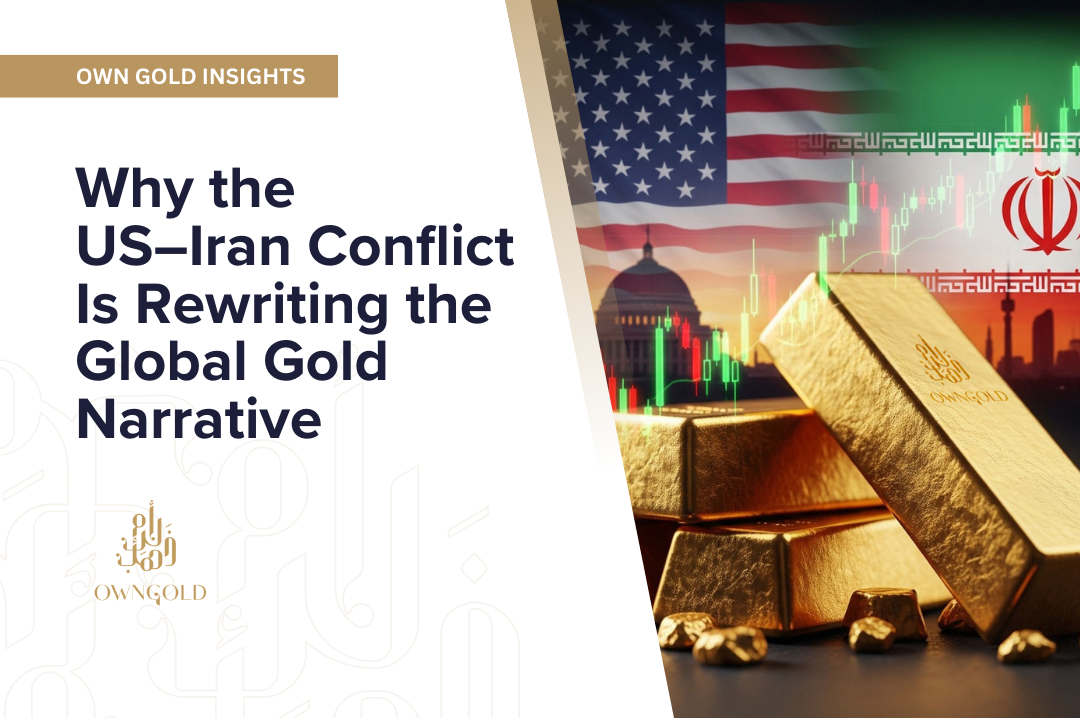
As tensions between the United States and Iran intensify, investors around the world are paying close attention to one asset above all others: gold. The precious metal has once again demonstrated its traditional role as a safe-haven asset, rising sharply as the risk of conflict in the Middle East looms large.
Geopolitical Risk Is Driving Demand
On 20 February 2026, gold prices climbed back above $5,000 per ounce, supported by renewed geopolitical stress between the U.S. and Iran – notably after warnings from U.S. leadership demanding rapid progress on a nuclear deal and signs of strengthened military posturing in the region.
Investors see gold as a safe harbour when uncertainty rises – a place to park capital when traditional markets look shaky. In recent trading sessions, gold hasn’t just ticked higher – it’s been propelled by fear, not fundamentals alone.
Safe-Haven Flows and Market Behaviour
Why does gold respond so strongly to geopolitical headlines?
- Flight to safety: When conflict risk rises, investors move away from risk assets like equities and into havens like gold, U.S. Treasuries, and the dollar.
- Risk premium expansion: The fear of broader regional instability – including threats to key energy routes like the Strait of Hormuz – embeds a risk premium into asset prices, boosting gold’s value.
- Volatility spillover: Fixed income and currency markets are also influenced, pushing traders to reset risk positions across portfolios.
This interplay means gold isn’t just rising – it’s reflecting a changing risk landscape.
Conflict Dynamics vs. Diplomatic Talks
It’s worth noting that gold’s narrative isn’t static. Recent weeks have shown two contrasting forces at play:
- Escalation headlines – where geopolitical rhetoric and uncertainty pushed prices up.
- Diplomacy-driven retracements – when reports of talks between Washington and Tehran briefly eased safe-haven demand.
This seesaw behaviour underscores an important point: gold is acutely sensitive to headlines. Every ounce of diplomatic progress can diminish immediate fear, and every suggestion of escalation can reignite safe-haven flows.
What This Means for Investors
Gold’s recent performance holds several lessons:
- Gold is a real-time risk gauge. Geopolitical stress, especially involving major powers, can drive price action faster than macro data.
- Safe-haven demand isn’t a fad – it’s a reflex. When markets price in conflict risk, precious metals become front-of-mind.
- Short-term volatility doesn’t negate long-term fundamentals. While prices may spike or pull back, the structural reasons investors hold gold – diversification, risk mitigation, and crisis hedging – remain valid.
The Broader Market Context
It’s also important to look beyond gold alone. Rising geopolitical risk is lifting energy prices and pressuring risk assets, reinforcing a broad shift toward defensive positioning. Markets tend to reprice assets in cycles – and right now, risk aversion is high.
In this environment, gold is not merely reacting – it’s leading sentiment.
Final Thought
Gold’s resurgence amid US–Iran tensions isn’t just a price move – it’s a market signal. It reflects uncertainty, fear, flight to safety, and a reweighting of risk across global portfolios.
For strategists, allocators and thoughtful investors, understanding why gold is reacting matters as much as how much it moves. In an era where geopolitical volatility is a central market driver, gold remains the compass.
What’s your take? Are you viewing gold as a hedge, a tactical trade, or something deeper this cycle? Discuss with the team at own gold today explore how strategic gold positioning can strengthen your portfolio and protect long-term value in uncertain times.